
(Im)migration
Life: When "Where are you from?" is no longer a safe question.

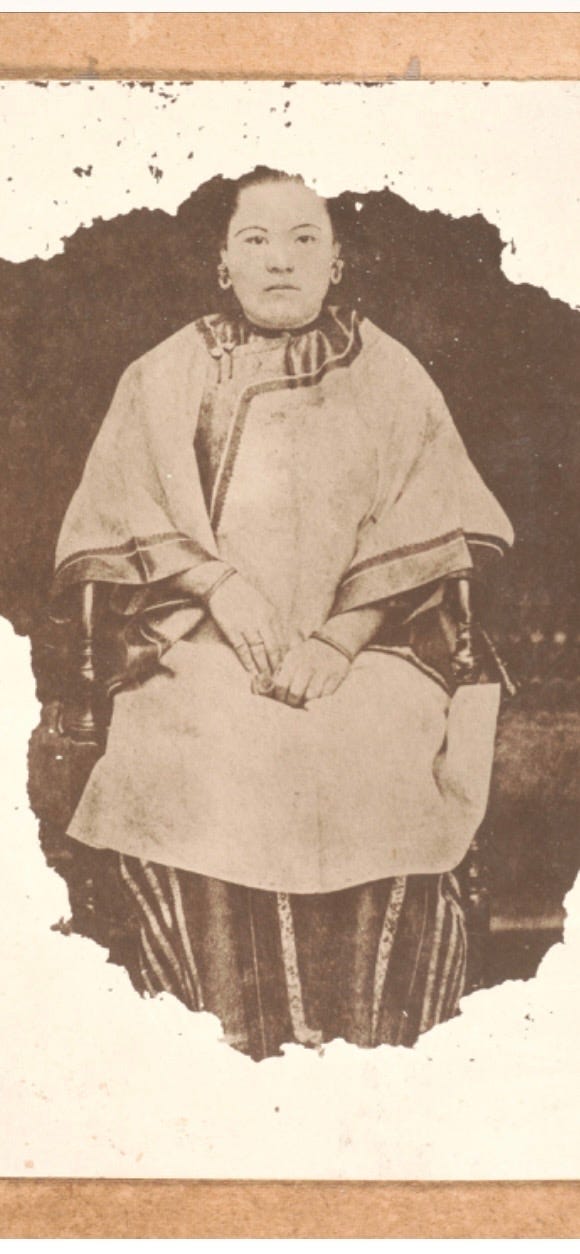
I have been hunkering down hibernating at home, immersing myself in pages about Peranakans. I resolved to learn more about the history of my cultural heritage and I am off to a good start. I minored in Sociology and Anthropology in university and I think that subject interest has never left me.
I learnt that the Chinese had been in Indonesia as early as the Song dynasty period of 960-1279 A.D. Most of them had come from Fujian, the southern province in China that is blocked from the hinterland by high mountains and which does not have fertile land, subjecting that population to the occasional famine. Being close to the coast, they could rely on trade, exporting tea, silk, paper, bamboo and porcelain. They would set sail in February and ride back on the monsoon winds to return in June. The migratory pattern was intermittently interrupted by dynastic bans and the pull of filial piety, where the eldest son obligingly stayed behind. When migration ramped up again in the mid 1700s, human labour was the main export, providing the capital as the colonial Dutch went about building infrastructure.
The rest of the story has been often repeated. The Chinese traders set up businesses and married native women who could help with housekeeping and overseeing the goods while the men returned to China for more supplies. The offspring were called “Peranakan” which defined them as locally born, or the progeny of foreigner-native union. The sons were sent back to China for education while the daughters stayed behind, kept close to home. Chinese patriarchy dictated that girls married “out”, consequently leaving the family. To keep them in the fold, the patriarch frequently engineered marriages between his daughters and promising young entrepreneurs from the homeland. When Chinese women were allowed to leave China in the 19th century, this new law enabled the sons to find brides from this supply. The Peranakan community entrenched themselves and with education and connections, left a significant mark in this region.
The Peranakan legacy has been rich. These early settlers rose to the ranks of captainship, taking charge of the community’s welfare by monitoring the birth, death, marriages, cemeteries and hospitals. They jockeyed to win bids to distribute imports and collect for exports, and served as the conduit between the local population and the colonial administrators. That influence spilled beyond Dutch-controlled Indonesia to other parts of Southeast Asia when the British set up its presence as well.
I am learning about my ancestors’ migration history at a time when the concept of “immigration” is roiled in global politics. I was born in Singapore, have lived in New York for almost 30 years, and have had stints in other countries in between. I have witnessed the discourse regarding immigration throughout.
“Where are you from?”, “Where is your family from?”, “Did you grow up in New York?”, “Did you grow up in the US?”, these questions, once conveyed out of innocent curiosity from one foreign-born to another, must be guarded with sensitivity in case one is classified a racist or xenophobic, regardless if our accent or appearance determines that we have more in common with each other than the white man standing beside us. Yes, I have been yelled at to “go home”. I once had a strange visit to my home when a confinement cook I had hired felt sufficiently brazen to bring along a woman with a newborn babe, to enjoy a grand tour of my apartment. Apparently the young mother had been living in the States for the four months prior to the birth of her child, staying in a temporary facility, with plans to return to her country. I did not understand the operation at that moment in time. Nor would I now dare to probe the politics and the personal stories behind anyone who wishes to escape suffering and to seek refuge in “the land of the free”. Thus, the migrants and the citizens both feel threatened because of such complexities. I wish it did not have to be that way, here in the States or anywhere for that matter.
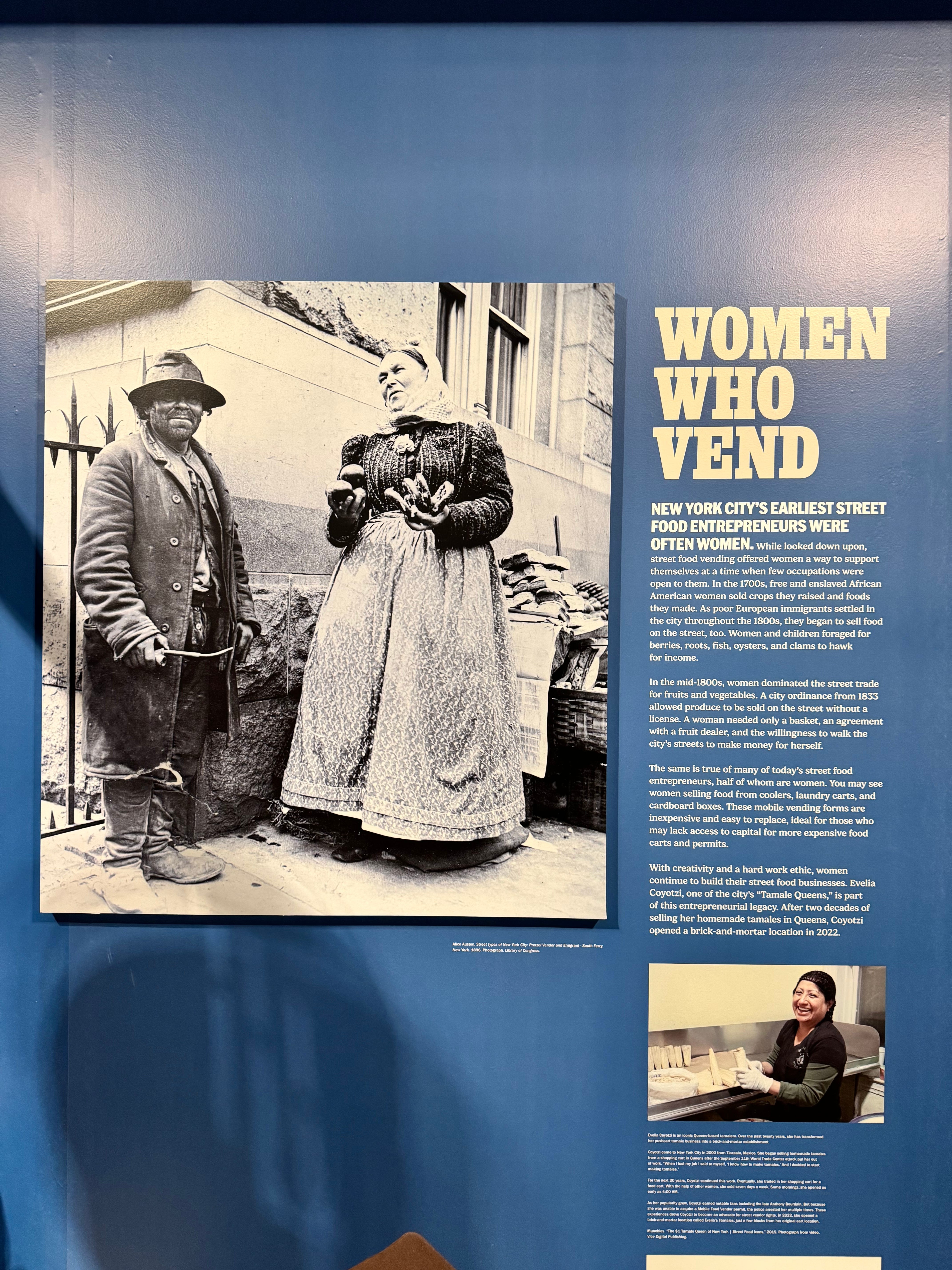
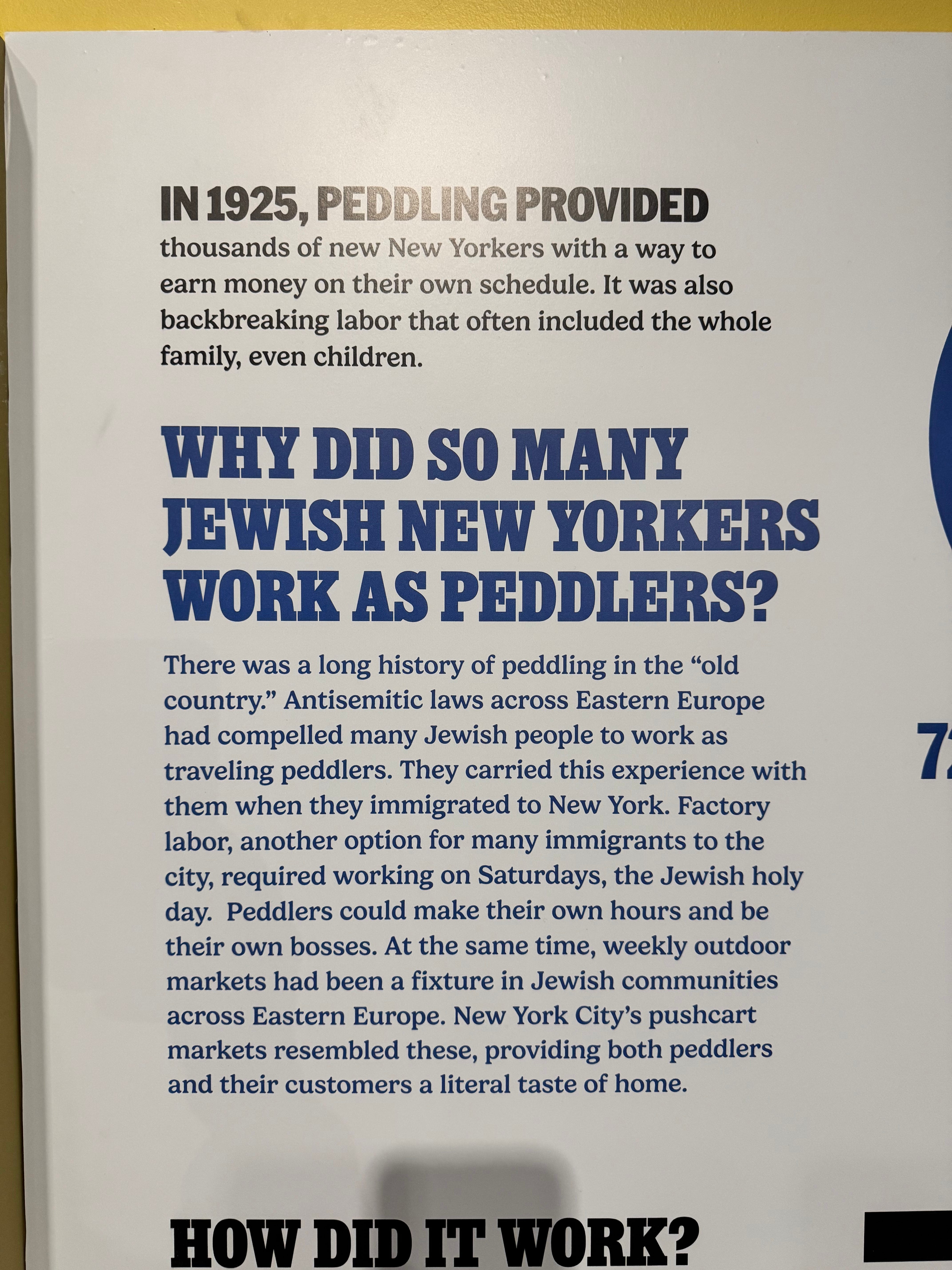
Last week, I visited the Museum of Food and Drink where the current exhibition is about Street Food. It enlightens us about the immigrants who came to New York and set up stalls to sell what they knew best. To survive, women plied the streets hawking fruits and vegetables, as early as the mid 1800s. They were no different than the Nonyas back in Singapore and Malaysia, who made their sticky kueh desserts to sell from door to door, to earn supplementary income for their family. Jewish immigrants peddled too, because they were frequently subject to anti-semitic laws in Eastern Europe and resorted to this flexible trade to circumvent discriminatory employment. Yet, out of all this, New York has birthed a culinary richness derived from these street foods, from hotdogs, bagels, pretzels and even the popular shawarma in more recent history.
Likewise in Singapore, the quintessential melting pot has served up a lavish buffet of beloved food that range from Indian parathas, Hainanese chicken rice, Thai curries, multiple variants of laksa, Indonesian rendangs and Cantonese dimsum. These are the dishes of the immigrants who settled on an island which famously does not have any natural resources except for the human kind.
Migration is a natural tendency. Animals migrate to protect their brood from harsh conditions, to seek shelter in better surroundings with food, freedom and fertile land. Humans are the same.
In April, I will be visiting the part of China where my forefathers set sail for the southern seas for bigger opportunities. I am a descendant of immigrants, many times over. The rich and intricate histories we write and tell, the food we cook, the traditions we pass on, bear witness to the survival instincts of immigrants that last for generations. I just happen to be one product of such a story.
Bibliography: “The Chinese from Indonesia”, Patricia Tjook-Liem, 2024
'Migration is a natural tendency' Amen. Happy travels Sharon
Beautifully observed and articulated, Sharon, from another immigrant, from a long line of immigrants !